
Home Brew Spirits
Ageing and Finishing Home Brew Spirits
A finished spirit often improves when its oak, flavour, colour and mouthfeel are adjusted in separate, measured stages. The most controllable approach is to work with a small test portion, record every addition, allow time for the flavour to settle, and scale up only after the trial tastes right.
Quick answer
- For flexible physical oak contact, start with measured oak chips and taste regularly.
- For character from a previously used barrel, choose bourbon, whisky, rum, port or sherry barrel chips or chunks that match the intended spirit.
- For easy removal from a bottle or carboy, choose the correctly sized oak spiral.
- For a quick, repeatable adjustment without loose oak, use a measured liquid oak or mature-oak enhancer.
- Use glycerine for body and a rounder mouthfeel, and caramel for colour. Neither one replaces flavouring or oak ageing.
Choosing a physical oak format
| Oak format | Example | Supplier starting direction | Best suited to |
|---|---|---|---|
| Plain or toasted chips | American Oak Chips or Toasted French Oak Chips | Approximately 10g per litre for 10 to 14 days, or to taste | Controlled trials where you want to choose the oak origin and toast character |
| Wet ex-bourbon barrel chips | Still Spirits Bourbon Barrel Chips | 50g in 2L of spirit for about 10 days, tasting before extending contact | Adding bourbon-barrel aroma and flavour from genuine used barrel oak |
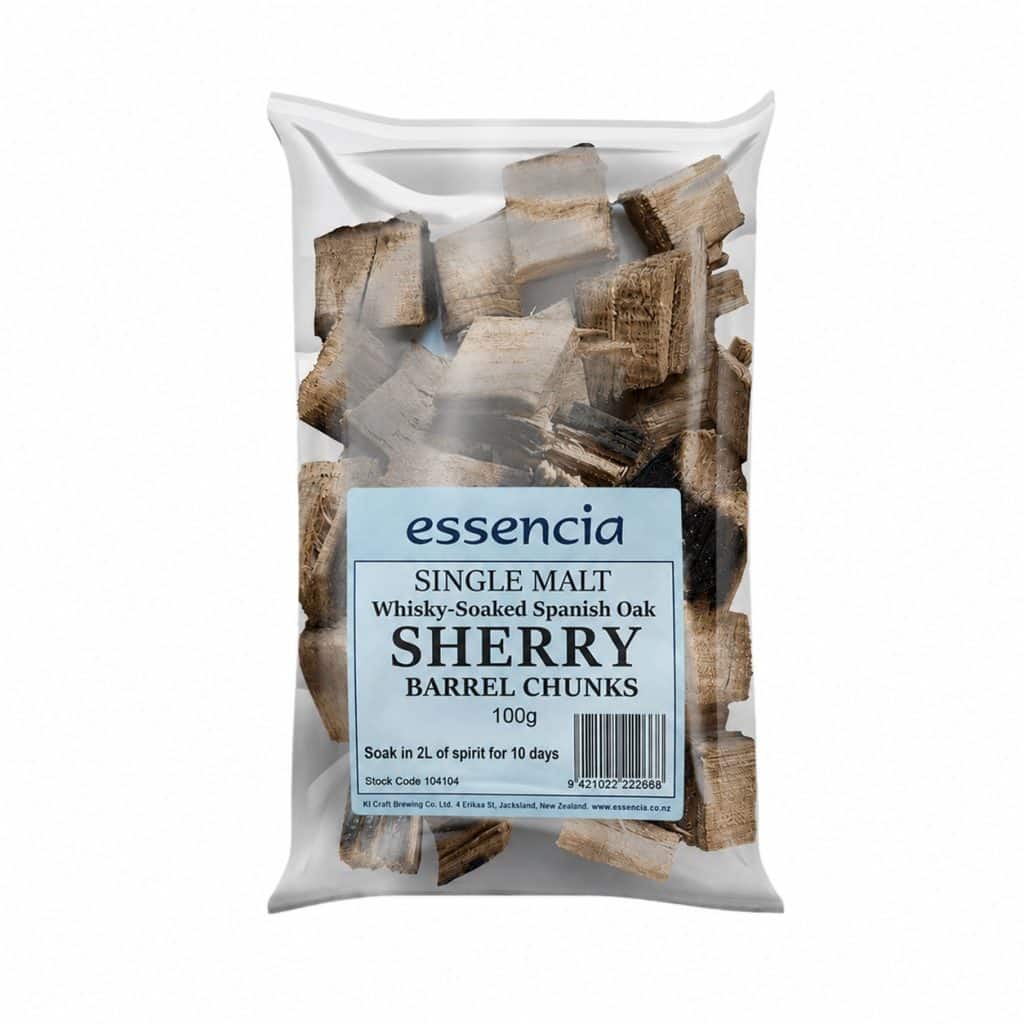
| Wet single-malt barrel chunks | Essencia Single Malt Whisky Barrel Chunks | First soak: about 500ml for up to seven days, tasting daily after day four. Later soaks use about 460ml and take longer | Strong whisky and char character on the first use, followed by lighter oak-led reuses |
| Wet whisky and sherry barrel chunks | Essencia Whisky Sherry Barrel Chunks | Up to 2L at around 40% ABV for about 10 days, tasting regularly | Combining whisky, sherry and oak character |
| Bottle spiral | American Charred Oak Bottle Spiral | One spiral per 1L for approximately one to two weeks | Small batches and easy removal through a suitable bottle opening |
| Carboy spiral | American Charred Oak Carboy Spiral | For spirit, beer or cider: one spiral per 11L for approximately three to six weeks | Larger batches in a suitable wide-necked carboy or ageing vessel |
These are product-specific starting points, not universal oak rules. Surface area, toast, previous barrel use, spirit strength, temperature and personal taste all affect extraction. Taste during contact and remove the oak before it becomes too dominant.
Dry oak, wet barrel oak or liquid oak?
| Option | What it contributes | Main trade-off |
|---|---|---|
| Dry chips or spirals | Oak, toast, tannin, colour and gradual wood extraction | Needs contact time and regular tasting; too much oak is difficult to reverse |
| Wet ex-barrel chips or chunks | Oak plus character retained from bourbon, whisky, rum, sherry or port barrels | Each product and reuse behaves differently, so the supplier’s soaking guide matters |
| Liquid oak or enhancer | A measured oak-style adjustment that is quick to mix and repeat | Adds flavour rather than physical wood contact; begin conservatively and allow resting time |
Liquid oak and finishing additions
| Addition | What it does | Current starting direction |
|---|---|---|
| Top Shelf Mellow Oak | Adds soft oak-aged character to brandy, whisky, dark rum, bourbon and suitable wines | Add 1 to 5ml per litre, starting low, then rest approximately seven to ten days |
| Top Shelf Premium French Oak | Adds concentrated French-oak character | Add 1 to 5ml per litre, beginning low, then rest approximately seven to ten days |
| Edwards Mature Oak Spirit Enhancer | Adds mature wood and aged-oak notes to bourbon, sour-mash and whisky styles | Start with 1 to 4ml per 700ml, mix and rest before adding more |
| Pure Distilling American Oak Extract | Adds American-oak, vanilla and light caramel character | Add 5ml per litre and adjust carefully to taste |
| Top Shelf Glycerine or Pure Distilling Glycerine | Adds body and a rounder mouthfeel with very little sweetness | Still Spirits: 5ml per litre. Pure Distilling: up to 5ml per litre. Follow the selected product |
| Top Shelf Distiller’s Caramel or Pure Distilling Caramel Concentrate | Adjusts colour from gold towards deeper amber or brown | Add very small measured amounts. Pure suggests 1ml per litre for golden spirits and up to 4ml per litre for darker spirits |
The spirit additives range also includes recipe components for peat, vanilla, cereal, fruit and astringency. These are concentrated blending tools rather than complete one-bottle spirit essences, so use a proven recipe or conduct small measured trials.
A controlled ageing and finishing process
- Start with clean, filtered spirit or a completed flavouring recipe. Measure its volume and record the starting strength.
- Choose a clean, sanitised, food-safe ageing vessel with suitable headspace and a compatible closure. A 5L Glass Demijohn is one option for an appropriately sized batch.
- Treat only a small portion first when trying a new oak, extract or additive.
- Add the physical oak or measured liquid addition, label the vessel with the date and dosage, and store it safely away from heat and direct light.
- Taste at sensible intervals. Remove physical oak once the balance is right; do not wait for a calendar date if the spirit is already sufficiently oaked.
- Let sediment settle, then transfer or filter carefully. Keep the treated spirit available for blending rather than forcing the whole batch to one oak level.
- Adjust mouthfeel or colour near the end, one measured change at a time.
- Allow the final blend to rest before bottling and record the successful recipe for the next batch.
Blending gives you a safety margin
Keep a portion of the original spirit unoaked where practical. If an oak trial becomes stronger than intended, blending it with the unoaked portion gives you more control than trying to mask the flavour with another additive. The same principle works when comparing two oak types: prepare separate samples, let them rest, then blend only after tasting.
Filtering after oak contact
Physical oak may leave fine particles or sediment. Remove the chips, chunks or spiral, allow the liquid to settle, then transfer it carefully. Filter only as finely as necessary, since aggressive filtration can also reduce wanted character. See the spirit filtering guide for the available methods.
Common mistakes
- Adding oak to the whole batch before testing a smaller portion.
- Leaving chips or chunks in indefinitely without tasting.
- Assuming seven days with high-surface-area oak is identical to years of maturation in a full barrel. It can extract useful barrel character quickly, but the processes are not the same.
- Adding glycerine, caramel, liquid oak and extra flavouring together, then being unable to identify which change caused the result.
- Using the dosage or contact time from a different oak format or brand.
- Failing to record the volume, dose, dates and tasting notes.
Choosing the flavour direction
Use the spirit commercial comparisons guide to choose a familiar style, or the neutral alcohol flavouring guide for the initial flavouring process. Then browse the full oak chips, chunks and spirals range to select the physical ageing method.